
We firmly believe that: “All minors are amenable to rehabilitation”. Cooperation and proper intervention by professionals, including educators, psychologists, social workers, and a skilled criminal defence lawyer specialising in juvenile law, are essential. With all this support, minors do not usually reoffend.
Parents who find themselves in this situation (and who are not to blame) should never give up on their children. For this, they need courage, courage and more courage.

The best defence for a minor in cases where they have committed the acts they are accused of is a well-negotiated PLEA AGREEMENT.
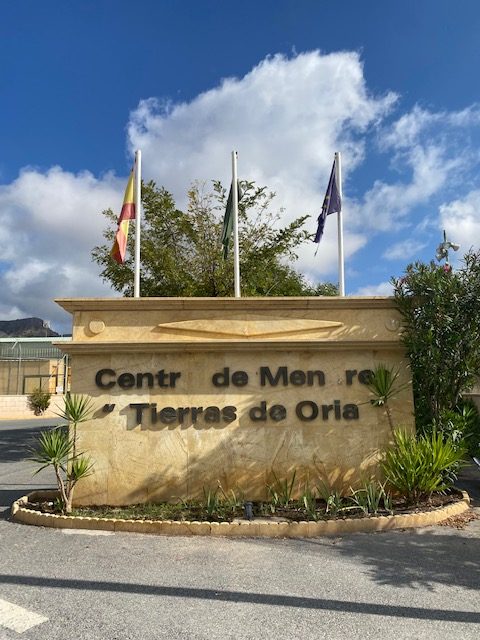
Depending on the offences committed and the seriousness of the facts, the Juvenile Court judge may impose a precautionary measure consisting of supervised freedom or placement in custody, either in a semi-open centre or in a closed centre (in cases where the offences are very serious).
The most important factor is a positive attitude from the minor
The minor’s cooperation is essential for the success of their rehabilitation. The first step is for them to come to terms with their new situation, both in terms of the consequences of their actions and the measure imposed as a result. A treatment process is initiated in which the Juvenile Court judge and the psychosocial team responsible for the minor are kept duly informed of any inappropriate behaviour during the precautionary measure or the execution of the sanction, as well as of their progress.
For this reason, we emphasise the importance of the minor’s cooperation and the need for them to engage properly in order to leave the juvenile centre as soon as possible and return to their family. These minors, who are often otherwise ordinary young people with personal difficulties and unresolved emotional issues, in most cases return to their lives fully rehabilitated.

As already mentioned, the intervention of a qualified lawyer specialising in juvenile law is very important. The minor does not reoffend, as they are properly advised and understand what has happened, the seriousness of the acts and the consequences they face, which leads them to change their behaviour in order not to repeat it. In fact, there are many cases in which these minors, once they leave, go on to study teaching, psychology or even law, in order to work in the juvenile centre where they stayed during adolescence.
The Organic Law 5/2000 on Criminal Liability of Minors has been amended on numerous occasions over the past two decades, as both the profile of juvenile offenders and the offences committed by them have changed in recent years. Twenty years ago, the most common offences committed by minors were theft with force, robbery with violence, and the unauthorised use of motor vehicles.
By contrast, in recent years, in our view, 40% of offences committed by minors include: offences of child-to-parent violence (filio-parental violence) under Article 173.2 of the Criminal Code, offences against sexual freedom, including sexual abuse under Article 181 CC, sexual assault under Article 178 CC, gender-based violence offences under Article 173 CC, offences against public health (sale of marijuana and cannabis under Article 368 of the Criminal Code), cybercrime offences under Articles 197 bis, 197 ter, 197 quater, 197 quinquies and 270 CC, and criminal damage offences under Article 263 of the same legal text.
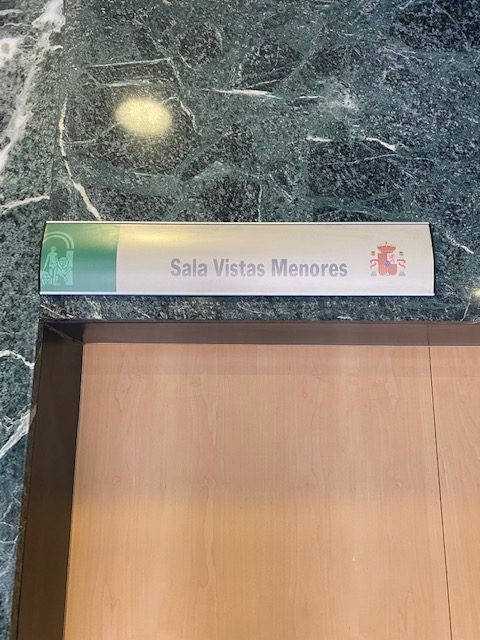
The best criminal defence lawyer specialising in juveniles would defend a minor differently from an adult, even if the offence were the same. The most effective way to defend a minor is to help them understand that rules must be respected in order to ensure good coexistence. As previously mentioned, if the minor has committed the offence, has admitted it in their initial judicial statement, and has undergone appropriate treatment, the best defence strategy is a well-negotiated PLEA AGREEMENT.
Depending on the case, the juvenile judge may or may not impose a precautionary measure of supervised freedom or placement in a juvenile detention centre (in a semi-open or closed regime).
The measure of supervised freedom consists of working, always with the cooperation of the minor, to provide them with the necessary and appropriate tools to help normalise their life.
The precautionary measure of placement in a centre may be in a semi-open regime, depending on the offence committed and the situation of the minor and their family. This precautionary measure generally lasts from a few months until the trial takes place, at which point both the minor’s behaviour and cooperation at the centre, as well as the psychological report and the report of the technical team, will be taken into account.For this reason, the best course of action for the minor is to behave properly, cooperate with psychologists and educators in their rehabilitation process, and, where possible, apologise in writing to the victim and make themselves available to repair the harm caused. It is essential that this is done sincerely and from the heart, with full awareness of the harm caused.
In general, juvenile offenders tend to commit certain types of offences. Among them, the following stand out:
For all of this, we provide an effective defence in which our main objective will always be to achieve the least detrimental outcome for our client.
To this end, we always seek, whenever possible, to find out-of-court settlements that are more favourable for the minor.
Our criminal defence law firm specialising in juveniles in Madrid and throughout Spain will provide legal advice to the minor so that they understand the rules they are alleged to have breached and the criminal consequences of their actions. In addition, they usually visit minors in the centre, if they are in custody, which provides essential support and proper guidance for them.
If the minor cooperates from the outset in their rehabilitation process, the technical team assisting them will submit positive reports to the judge, and thus, when the day of the trial arrives, the sentence will be much more favourable for the offending minor who has admitted the offence and who has participated positively.
Regarding the sanction imposed on the minor, this will depend both on the factors mentioned above and on how the events occurred, their level of participation, and any mitigating or aggravating circumstances that may apply. Unlike what happens in some cases within the adult criminal justice system, sentences for each offence are not added together. That is, if a minor has committed four offences, the penalties for each of these offences are generally not accumulated; instead, the sanction most appropriate to the specific case will be imposed, always taking into account the progress made in their rehabilitation and recovery process.
So, if the penalties for all offences are not added together, what sentence is applied? It always depends on how the minor has responded to therapeutic treatment, their behaviour, the results of the workshops and educational activities carried out at the centre, as well as their willingness to rehabilitate and to repair the harm caused to the victim before the trial.
The advice of the best criminal defence lawyer in Madrid would be that the minor should cooperate positively from the outset in their treatment, in the event that a precautionary measure of supervised freedom or placement in custody is imposed. It is important that they acknowledge their actions and offences as soon as possible, in order to begin working on changing harmful substance-related habits for healthy sport and study, or any other activity they may need, want or be able to carry out at the centre.
The family’s cooperation in the minor’s rehabilitation is very important, as their support and forgiveness, if present, can be extremely helpful in the treatment and recovery process.
It is important to choose a lawyer specialising in juvenile criminal defence carefully. Although a publicly appointed criminal defence lawyer is also a qualified professional, it is true that trust, communication with the minor, and visits to the centre may be more frequent with a privately appointed lawyer. In addition, consultations with parents may also be more regular, and they may feel more comfortable with a private juvenile defence lawyer in Madrid, where there is a wider range of professionals to choose from due to the city’s size and legal market.
As we have said and continue to emphasise, the intervention of a skilled juvenile defence lawyer is essential during a minor’s first contact with the justice system, since if they admit the facts and cooperate, they will have taken a giant step forward.
We reiterate that, if the minor admits the facts and also cooperates, they will have taken a significant step forward. Naturally, if the minor denies the allegations, the criminal defence lawyer must seek an acquittal. However, the lawyer should help the minor understand that, if they did commit the offence, denying it is not in their best interests, as they may face a more severe sanction than if they acknowledge responsibility and efforts are made to negotiate the most favourable outcome.
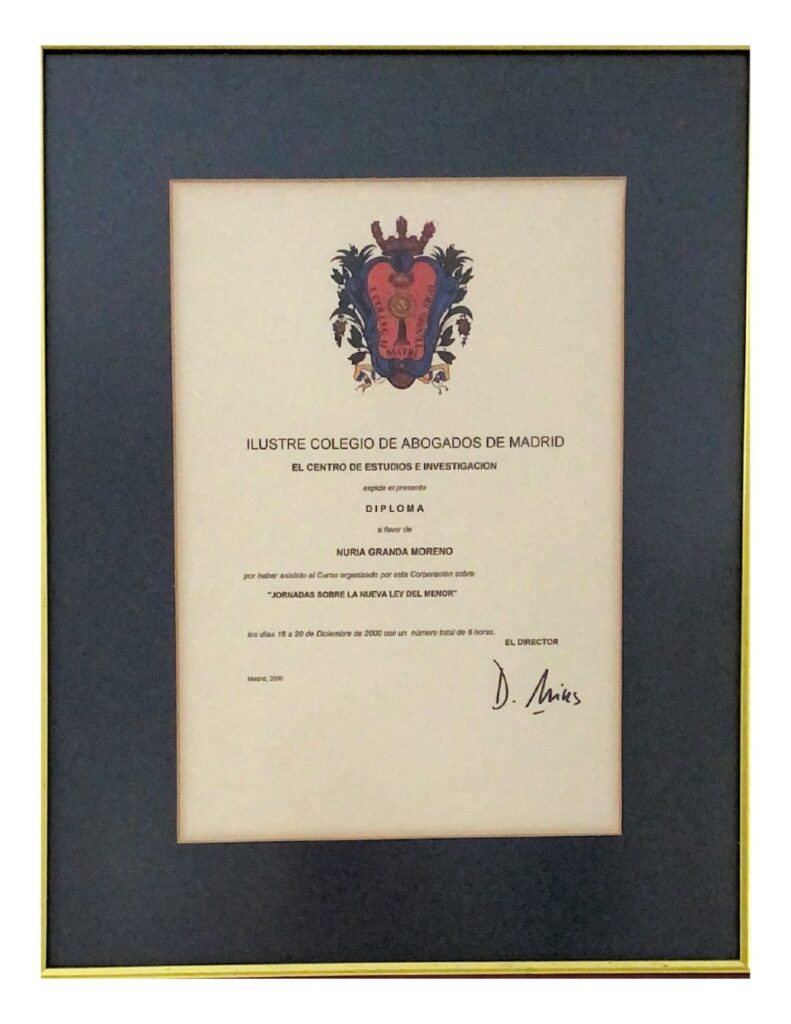
Granda & Asociados is a criminal defence law firm in Madrid, Spain and throughout Europe, specialising in juvenile law. For twenty-five years, we have been defending adolescents who, on certain occasions, engage in conduct that may constitute criminal offences. These actions are often the result of poor influences, youthful rebellion, or a lack of information. Other minors act out of fear, which they often transform into anger and, subsequently, anger into resentment, without knowing how to channel those emotions constructively.
The rehabilitation programmes applied to them help them address and manage their anger through therapy and sport. They are taught how to release tension in a healthy way, understand themselves better, manage their emotions, feelings and any emotional difficulties they may have, develop self-control, and learn how to solve problems or live with them, always with full respect for others and for themselves.
In addition, overcoming dependence on marijuana, cannabis or other drugs is essential for their rehabilitation to be successful.
Over time, this experience will have been of great value to them in life. In fact, they will often feel proud of the progress they made and of the people they have become thanks to the guidance and support they received.
Fewer than 15% of minors reoffend, and when reoffending does occur, it is often because they return to an environment that encourages such behaviour. However, 85%—the vast majority—overcome these difficulties successfully, return to their families, and either resume their studies or begin working.
Article 9.3 of Organic Law 5/2000 on the Criminal Liability of Minors provides that the duration of the aforementioned measures may not exceed two years. Article 10 of the same Law establishes two exceptions to this limit. First, where the minor was 14 or 15 years old at the time the acts were committed, the duration may be up to 3 years. Second, where the minor was 16 or 17 years old at the time of the acts, the maximum duration of the measure may be up to 6 years.
Once the trial has been held, and taking into account the individual circumstances of each case, the judgment will impose a sanction on the minor. This may consist of continuing, for the duration of the sanction, the same precautionary measure previously imposed on the minor, provided that they continue to make positive progress. For example, if the minor was subject to a precautionary measure of supervised freedom, the sanction may consist of remaining under supervised freedom for the period specified in the judgment.
Where the precautionary measure imposed is placement in a semi-open regime, and the minor has cooperated positively, the sanction may consist of placement in a semi-open juvenile centre for a period ranging from nine months to one year (or up to two years for more serious offences). However, where the offences are particularly serious, placement in a closed centre may be imposed instead. Pursuant to Article 7.2 of Law 5/2000 on the Criminal Liability of Minors, the second stage of the sanction may consist of a period of supervised freedom lasting several months, or another appropriate measure.
It should also be noted that placement in a semi-open regime is compatible with a sentence of community service, in cases where, in addition to the principal offence, the minor has committed other less serious offences.
No debemos olvidar que toda la jurisdicción de menores está diseñada para ayudar al menor en un momento puntual y para que se reconduzca y siga su vida con plena normalidad pero siempre con respeto a los demás.
For all of the above, we recommend that you contact our law firm specialising in juvenile law in Madrid. We will provide you with the best legal advice and criminal defence representation.